Consider the grip
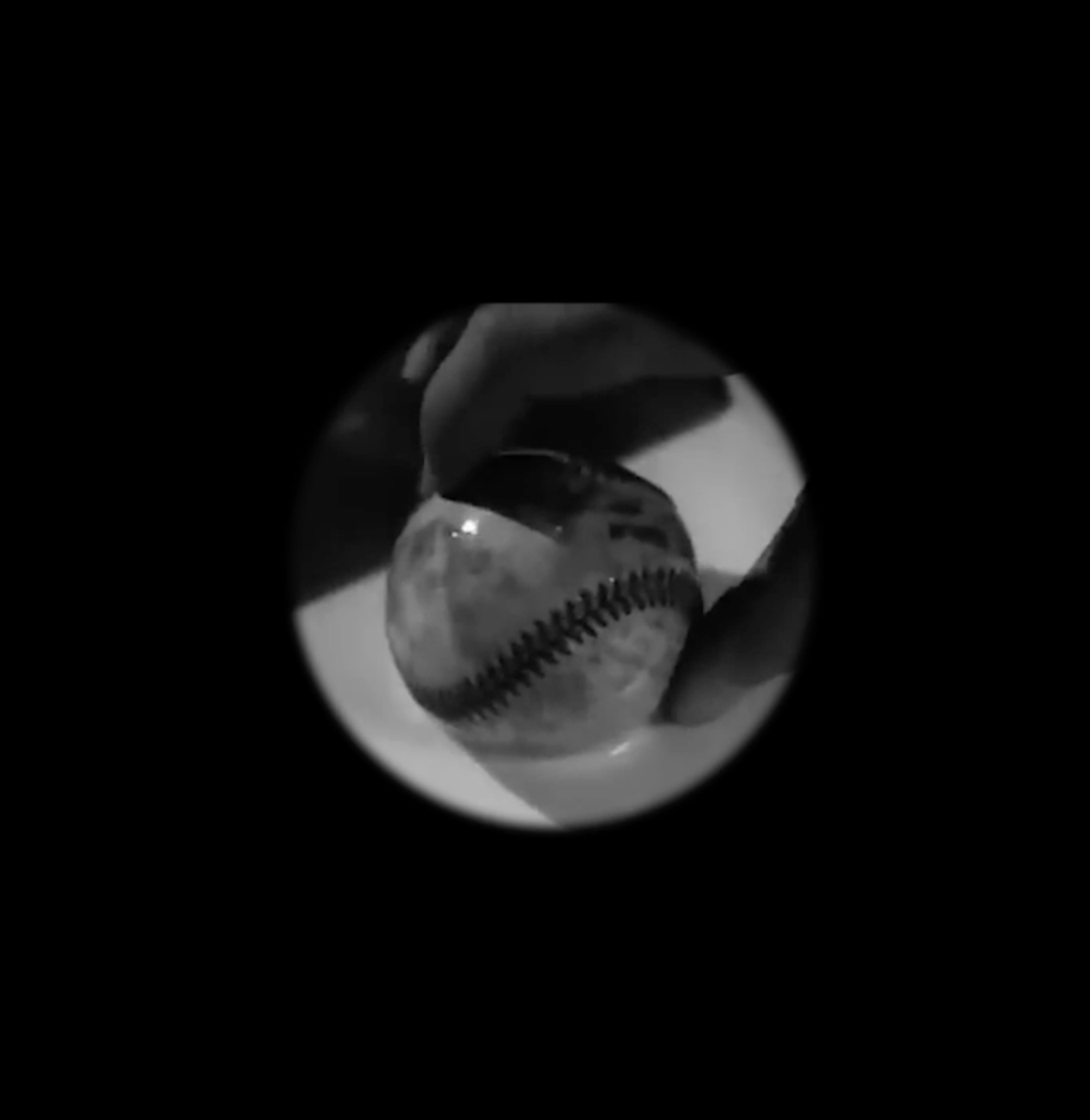
In the 1880s baseball was a rising national phenomenon but still finding its strategic and methodological footing. One of the emerging techniques in pitching was the offspeed pitch, where the pitcher’s motion mimics that of his regular fastball but releases at a much lower velocity. This is achieved by changing the grip on the baseball, allowing it to spin in different directions or rates upon release. Several pitchers were now throwing what was dubbed a ‘curved ball,’ where the ball moved both vertically and laterally (or appeared to) as it traveled to the plate. The problem was that physics at the time had no way to account for lateral movement in projectile motion as it was understood: a ball may ‘break’ as gravity tempered the force of the pitch, but that motion was strictly vertical. Yet players and fans all could attest: the curveball did curve laterally. If it was an optical illusion, it was one that occurred en masse, from many different perspectives. Physicists who loved the sport took up the charge to find out the truth, and were eventually able to confirm lateral motion in spinning projectiles: baseball changed the trajectory of how projectile motion was studied. And so while deception was still the primary concern of a curveball, the illusion was still true: a curveball did curve.
In 1941, when the spectre of impeding warfare felt untenably vast and inevitable, an unlikely narrative reemerged: the curveball didn’t actually curve, said a vocal subset of baseball players and fans; and moreover, it never did. The implication captured Life Magazine’s interest—they tasked photographer Gjon Mili to attempt to prove it through a series of Muybridge-esque high-speed photographic tests. As with all scientific inquiry, the parameters of the experiment determine the parameters of its results: Mili picked Cy Blanton of the Philadelphia Phillies to be his subject, a pitcher famous for his 12-6 curveball. Like its name suggests, a 12-6 curve moves in relation to the 12 and 6 positions on a clock; which is to say, it had vertical break but infinitesimal lateral movement. Mili had ‘proved’ through his lens: the curveball didn’t curve. And what did it say about the credulous American public, that we had all unquestioningly believed it? If we can’t trust our eyes, where can we place our faith?
World War II forced radical shifts in the public understanding of scientific innovation and inquiry. Life revisited the curveball debate in 1953, this time with ‘new and improved’ camera technology (developed for capturing the explosions of atomic bombs). Mili picked a different pitcher with a different curveball, painted the ball half-white and half-black, and used a much-heightened shutter speed. Thrown in the dark, it appeared in Mili’s images as a moon cycle, traveling across a night sky. These images were paired with a study by MIT aerospace engineers involving a wind tunnel and suspended baseball. The verdict was now a definitive yes: a curveball does curve laterally, but its illusory quality is heightened by the perspective of the batter and causes the ‘break’ to appear much sharper than it actually is.
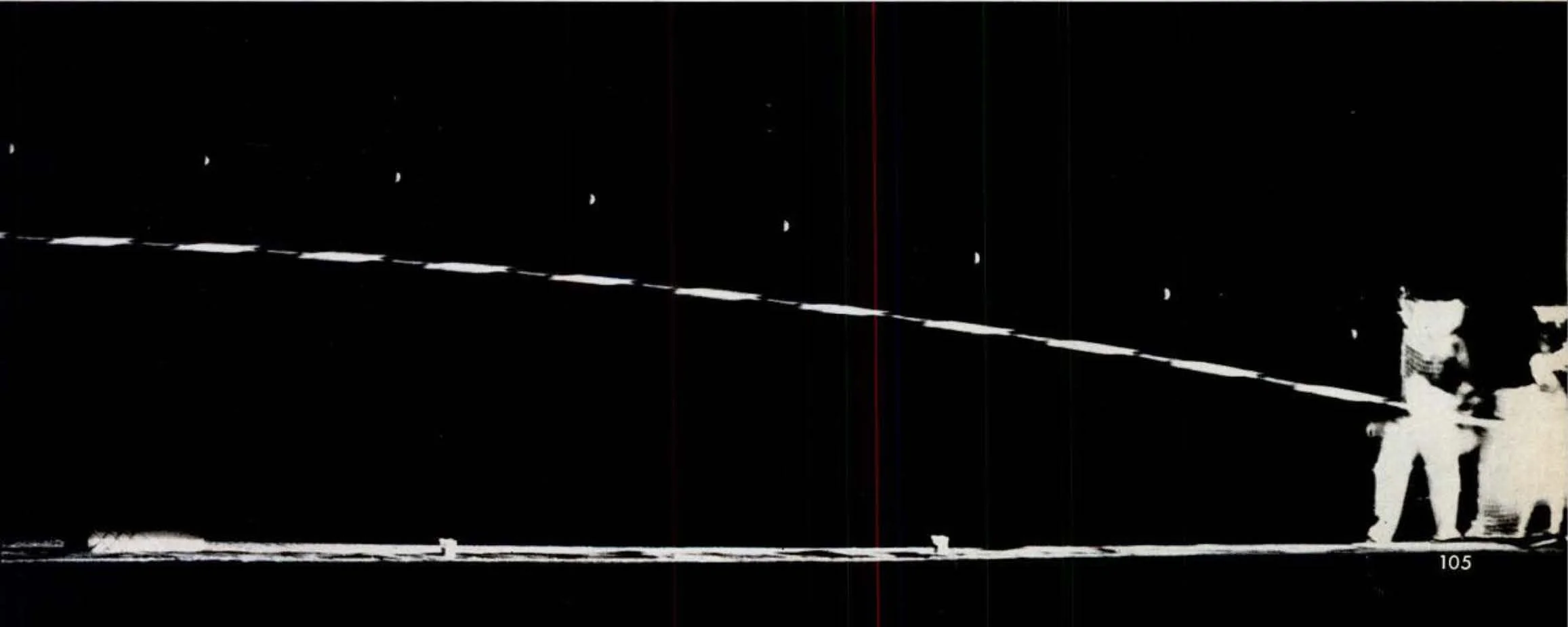
Gjon Mili, LIFE Magazine, July 27, 1953
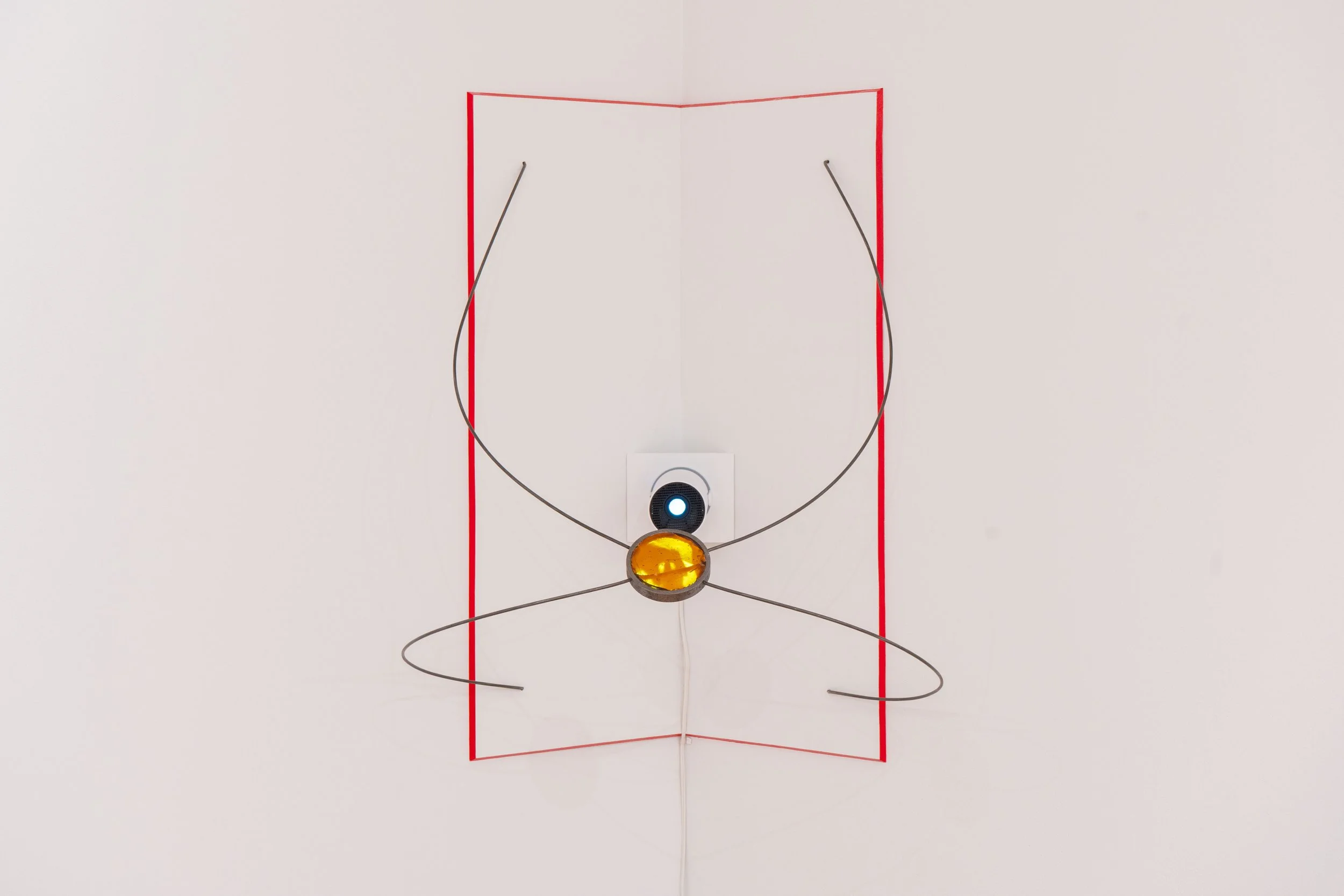
Installation shot of Consider The Grip, 2026
Consider The Grip emerges from an unlit corner of the gallery space. Framed by a ‘strike zone’ of red paint, a four-legged steel armature extends a four-inch diameter disc of cast pine rosin. The pine rosin acts as a screen for a small cylindrical projector mounted flush to the corner of the gallery. Sporadic sounds float from the projector’s internal speaker: a transatlantic narrator asks you to first consider the grip, followed by a series of comical whooshes that evoke dated sound effects. Occasionally a voice interjects with a Wow!
The content of the video cuts between several found footage sources. A baseball player in clearly dated uniform pantomimes throwing a baseball, zooming in and holding on his hand. As the footage cuts to other angles of his hand, the moon turns over the pine rosin screen, superimposed. A pitcher then stands alone on the mound, framed as if through binoculars. A hand appears, rinsing a baseball. The moon returns, turning from full to sliver, and a man attempts to hit a baseball suspended on a string, the ball continuously avoiding his wooden stick.
The ball enters a vat of milky liquid, then cuts to a tidal wave machine, a rubber ball bobbing along the surface of the water. The Earth now appears, a digital model of the moon orbiting around it—then Earth fades out in favor of a finger tapping on leather, a heavily zoomed-in surface of a baseball glove. A batter swings at a pitch that dodges his bat in a ridiculous and comical arc, followed by an incredulous Wow!

Still of Consider the Grip, footage from It Happens Every Spring (1949)
The ball is removed from the milky liquid. The rubber ball bobs along on clear water. Another pitch comes to the same batter, following another unbelievable arc and releasing another unbelievable whoosh. The orbit returns as a man mutters that it must have been an optical illusion. The screen goes black, an announcer narrating the pitch: Wow! What kind of a ball was that?
A pitcher winds up to throw. He is perhaps too good-looking and his movements too exaggerated to be real, a pantomime. The camera angle is below him looking up, the field invisible. His opponent invisible. Behind him the night sky extends, punctuated only by a single stadium light. It is doing the work of the moon.
Before the pitcher can release, the footage cuts to the same player it started with, also winding up to throw. In slow motion, he is paused at the furthest extension of his arm. The footage then draws an arc that follows his arm as he throws the ball, yet another orbit.
Then everything starts again.

Closing clip from Consider the Grip, footage from Throwing in Baseball (1947)
The first footage source in Consider the Grip is a digitized Encyclopedia Brittanica 16mm film from 1947 titled Throwing in Baseball, which details the various techniques and technical requirements when throwing a baseball. Viewers are asked to “consider the grip” before the action of throwing, showing several close-up shots of a hand at various angles holding a baseball. The video also demonstrates the arc, release point, and follow-through of the arm motion, illustrating that in an overhand throw, the throwing arm follows a circular motion from start to finish.
It Happens Every Spring (1949) follows a university chemist (and huge baseball fan) who incidentally produces a substance that repels wood wherever it is applied. Strapped for cash, he applies the serum to his baseball glove and uses it to convince a Major League Baseball team that he is a professional pitcher, requesting cash payment for every game he wins. When the liquid is applied to the ball it repels the bat, comical sounds and early special effects emphasizing the ball’s unnatural motion like other science fiction films of the time. Spectators and players alike assume its illusory powers are merely optical and he becomes a celebrated athlete, even winning the World Series before his antics catch up to him and a line drive breaks his hand, ending his athletic career but allowing him to return to his academic and romantic life from this ‘dream’ unscathed.

Video still from Consider the Grip, footage from It Happens Every Spring (1949)
Both Throwing in Baseball and It Happens Every Spring straddle an immediately post-WWII political conception of scientific inquiry, produced in 1947 and 1949 respectively. Throwing in Baseball breaks down the minutiae of hand position and body orientation to instruct and demystify. It Happens Every Spring exhibits a remarkable moral ambiguity when considering its protagonist’s deceptions: the position of the film seems to be that athletic force is a blunt instrument when compared to technological innovation, and therefore the ‘hubris’ he is punished for by never playing again after winning his final game is no more than a tertiary factor in his life and barely feels like a reprimand. Science is his calling, and science and scientific innovation have the moral high ground.
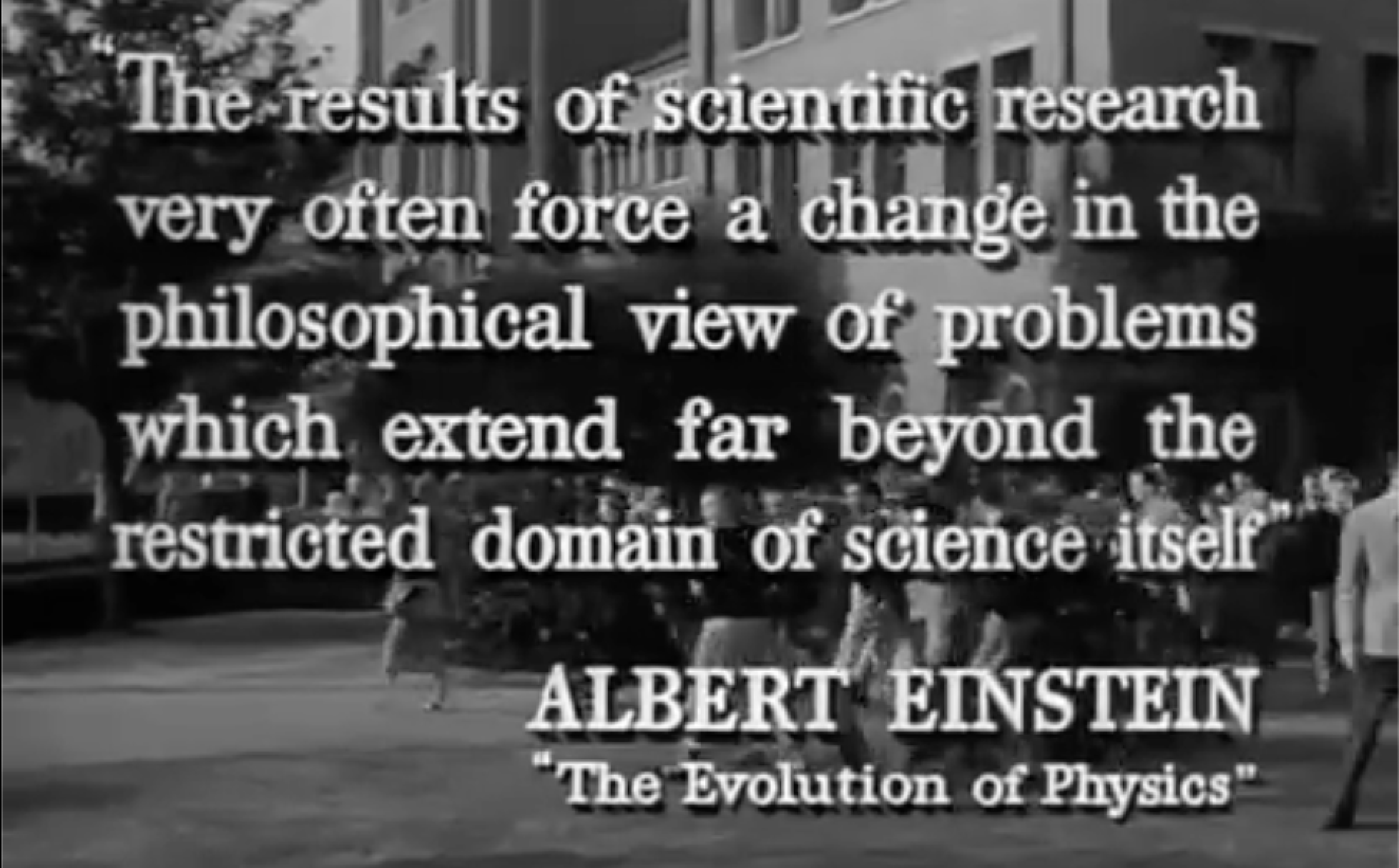
The opening shot of It Happens Every Spring (1949)
But perhaps most tellingly, the protagonist’s assisted curveball is comical and absurd, but unfalteringly real, even if no one else believes it is.
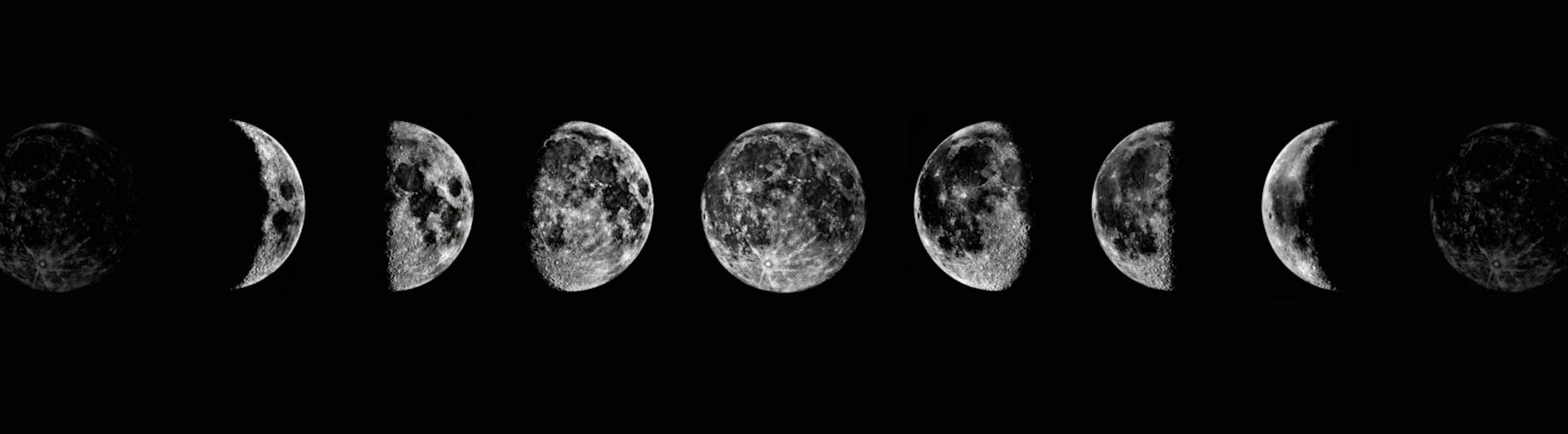
The third source of found footage in Consider the Grip is a series of educational videos on moon cycles and wave patterns. The lure of the curve is gravitational, cyclical—the spin rate on a curveball is much higher than a standard four-seam fastball, and indeed much faster than had been previously assumed was physically possible for humans to achieve. The half-moon unveils the spin of the curve, and the moon calls the tides, the waves. Physics tells us that a wave follows a circle at every point along its motion, just as the arm of the thrower does. Faith waxes and wanes with the political conditions of the world we live in, and truth bobs along with each crest and trough.
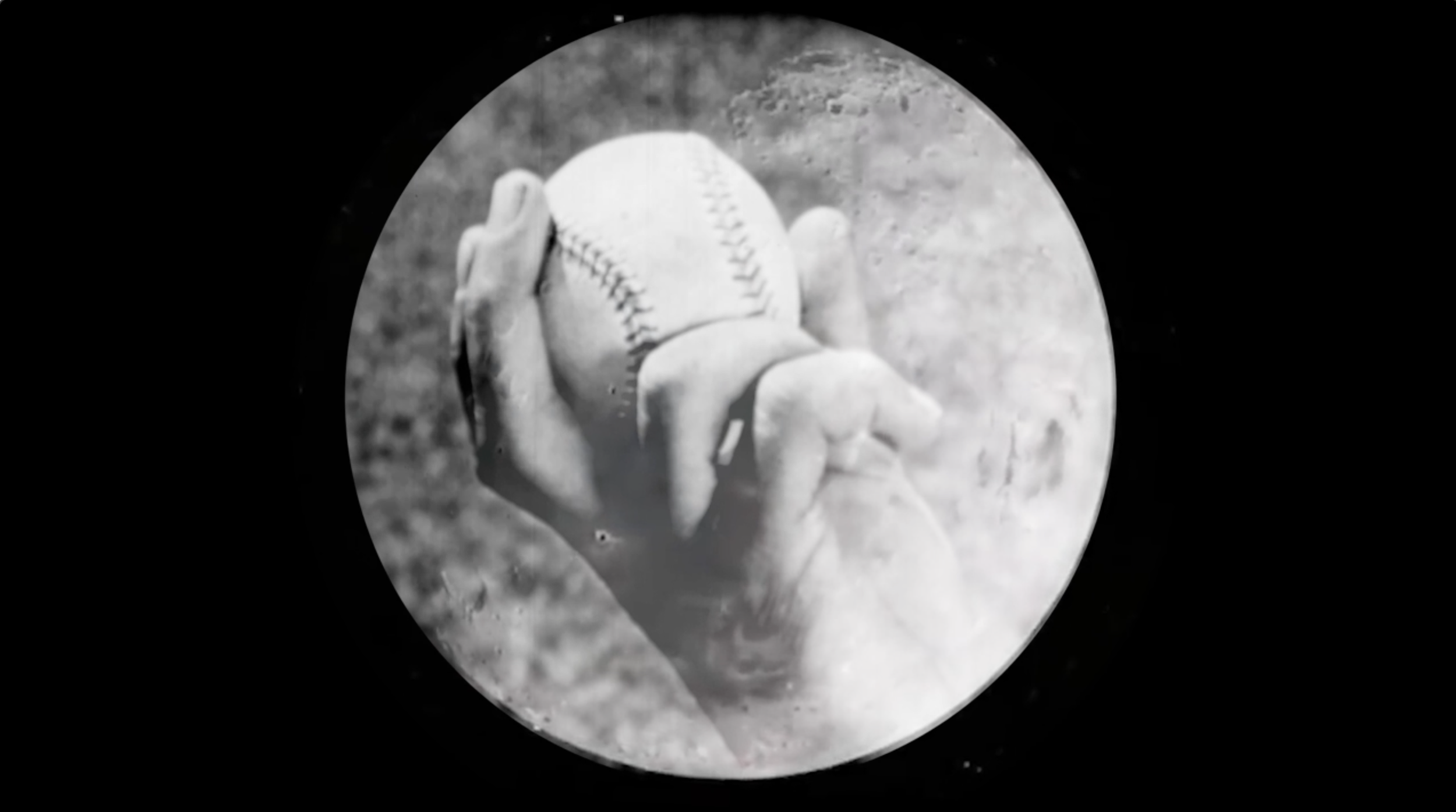
Still from Consider the Grip combining footage from Throwing In Baseball (1947) and moon cycle timelapse videos
Let’s consider the grip: even if we know what’s real, and we know what’s coming, it still might fool us. We still might swing and miss.